Through The Collab Way, you’ll experience evidence-based, integrative IVF care that supports your body, mind, and future family, every step of the way.
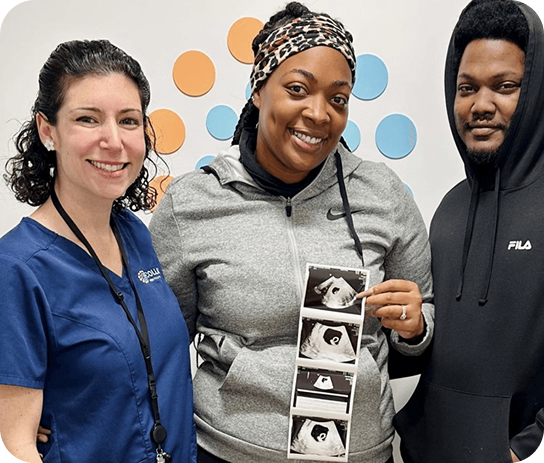
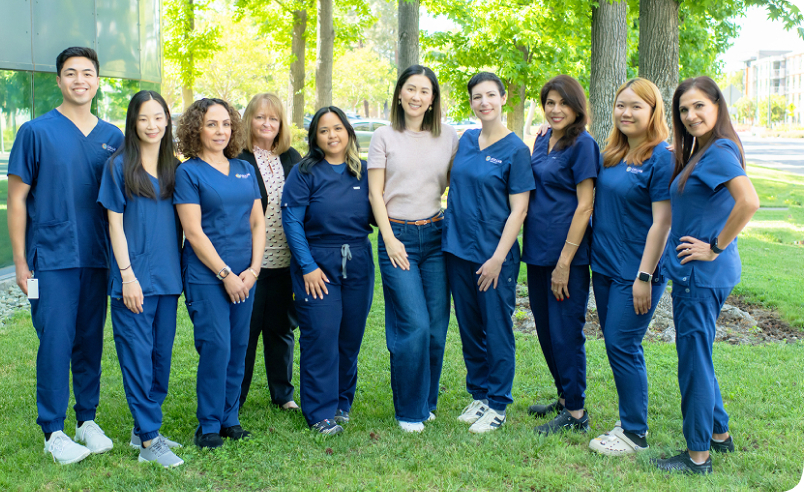
I can’t say enough good things about my experience at Collab. Dr. Segal and the whole team are incredible! From our first meeting I really felt that Dr. Segal listened to my concerns and goals and took the time to get to know me as a person and a patient. Everyone on the team is so kind and compassionate. The level of communication is excellent and far exceeds what I’ve experienced at other fertility clinics in the past. The facility is beautiful and comfortable which is a really nice bonus too!
CASEY S.
My husband and I are absolutely blown away by Collab Fertility and Dr. Segal! From our first meeting, I was immediately struck by her compassion, clear expertise, kindness, and exceptional communication. Having been through the difficult process of IVF for over a year and using two other clinics, I speak from experience that there is NO ONE better than Dr. Segal and her clinic. We hope that through our own experience, others can benefit in their fertility journey like we finally now are.
LISSA AND JUSTIN
Collab Fertility really took care of me from step one to the operating table! Dr. Segal and her staff are so caring and gentle. They really explain every single step so that there is no surprises. They were just so welcoming and kind!! I really can not sing high enough praises to them. I had a wonderful experience working with them and will def be doing so again in the future!
MAY J.
Dr. Thalia Segal is a double-board-certified fertility specialist and a leading voice in reproductive medicine. With more than a decade of experience and thousands of successful outcomes, she’s known for her expertise in IVF, fertility preservation, complex infertility care, and her compassionate bedside manner. Her research on environmental health and reproduction is widely published.
Collab Fertility was honored as Best of the East Bay 2025 by Diablo Magazine for our innovation, patient care, and community impact.We are proud to maintain the highest standards in fertility care through the following accreditations and certifications:


IVF is one of the most effective fertility treatments available. At Collab Fertility, each IVF plan is tailored to your body, goals, and timeline—guided by science, delivered with compassion, and supported by The Collab Way integrative model.
Your journey begins with a detailed consultation to understand your health and fertility goals. Together, we design a personalized treatment plan.

.png)
Medications encourage your ovaries to produce multiple eggs, which are then gently retrieved in our on-site surgical suite.
.jpg)
In our state-of-the-art lab, eggs are fertilized using advanced techniques like ICSI and cultured under precise lab conditions.
.jpg)
A healthy embryo is selected for transfer into the uterus, with additional embryos safely frozen for future use.

.jpg)


State-of-the-art IVF lab
Advanced, on-site, same-day fertility testing for men and women
Cutting-edge genetic testing to identify the healthiest embryos
Integrative care model, The Collab Way, supports your body, mind, and emotional well-being
Welcomes everyone, including single parents and LGBTQ+ parents

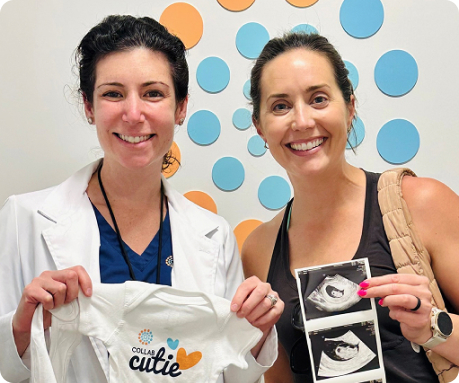
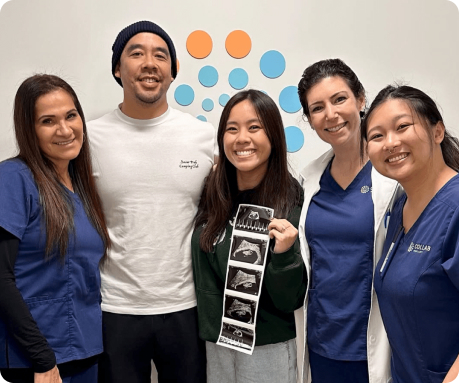
Affordable options. Transparent pricing. No hidden fees. At Collab Fertility, we’re committed to making fertility care accessible and stress-free, with clear communication, flexible financing, and compassionate support every step of the way.
Our financial counselors help you understand and maximize your benefits. In-network with UnitedHealthcare, Cigna, Hill Physicians, Health Net, and Carrot. For other plans, we’ll provide detailed receipts and assist with reimbursement.
Flexible, low-interest payment plans through PatientFi, CapexMD, and Maven Wallet make treatment more manageable. We’ll help you find the best solution so you can focus on your fertility journey, not the paperwork.

Meet our team and explore your personalized
options for fertility care.


In vitro fertilization (IVF) is a type of assisted reproductive technology (ART) used to help individuals or couples conceive a child. The process involves fertilizing an egg with sperm outside the body in a laboratory setting. IVF is often used when other fertility treatments have been unsuccessful or when there are specific fertility issues such as severely low sperm counts or blocked fallopian tubes.
The success rate of IVF depends on a number of factors, however female age is the most important predictor of success.
The average success rate of IVF on the first attempt depends heavily on female age and whether preimplantation genetic testing was done on the embryos. The success rate is about 65% live birth after transfer of a single euploid embryo.
The best age for IVF is typically under the age of 35, when egg quality is highest. After age 36, egg quality starts to decline as do success rates. We can still have very high success in women over 40 when we incorporate PGT-A.
While IVF can be an effective treatment for infertility, it carries some risks and potential complications. Ovarian hyperstimulation syndrome (OHSS) is a potential risk from the medications and involves enlargement of the ovaries and fluid accumulation in the pelvis and abdomen. OHSS can be prevented with frequent ultrasound monitoring visits, choice of trigger agents used to mature the eggs prior to retrieval, and use of medication called cabergaline. These risks can vary based on individual health factors and how the body responds to the treatment.in addition, the egg retrieval has the risks of anesthesia, risk of infection, bleeding or damage to organs including the bowel and bladder. These are very rare and occur <1% of the time.
You will likely need to administer 2 injections daily for 10-12 days, with a 3rd injection started on the 6th day.The number of injections required during an IVF cycle can vary based on the individual's specific treatment plan, but it typically involves multiple injections over a period of 10-12 days.
IVF injections can cause various side effects, which may range from mild to more serious. There may be bloated, twinges of pain, or bruising at the injection site. Some experience heightened emotions, insomnia, nausea, and breast tenderness. These symptoms are temporary and most people feel back to normal when they get their menstrual cycle about 2 weeks after the egg retrieval.
We are located in the Shadelands medical hub, 4 minutes from John Muir health.
2700 Ygnacio Valley Rd, Suite 170
Walnut Creek, CA 94598


